Fredericton grew along the Saint John River, and that floodplain history left a legacy of soft alluvial soils and variable glacial till layers beneath the downtown core and newer subdivisions alike. When the city expanded during the 1960s and 1970s, many structures were placed on shallow foundations without thorough subsurface investigation, and we now see differential movements showing up as cracked brick veneers, uneven concrete slabs, and misaligned door frames in older neighbourhoods like Marysville and the South Side. Understanding how much a foundation will settle — and more importantly, how unevenly — requires a site-specific differential settlement analysis that connects local geology to the structural loads. In our experience, pairing this study with a consolidation test on undisturbed samples helps predict long-term creep, while a permeability field test tells us how quickly pore pressures will dissipate under load.
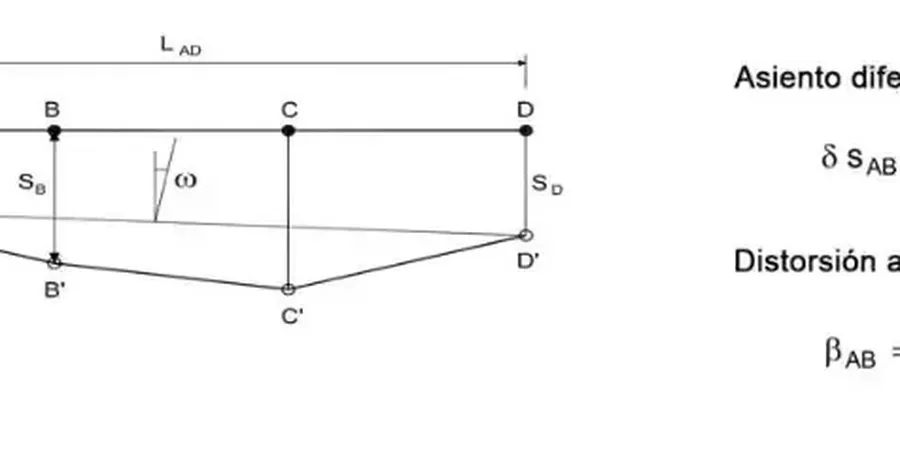
In older Fredericton neighbourhoods, we regularly see 25 to 50 mm of differential movement across slab-on-grade floors built before the 1980s — enough to compromise interior finishes and utility connections.
Technical details of the service in Fredericton
Demonstration video
Typical technical challenges in Fredericton
Fredericton sits about 20 metres above sea level along the Saint John River, and the city's 63,000 residents rely on infrastructure built on soils that range from dense till on the higher terraces to soft, highly compressible silts near the river. During the spring freshet, water tables can rise by more than a metre, saturating clay layers and reducing their effective stress — a classic trigger for differential settlement in lightly loaded structures like houses and low-rise commercial buildings. We have seen cases where a single corner of a foundation settled 40 mm more than the opposite corner within two years of construction, cracking the interior drywall and jamming windows. A proper differential settlement analysis catches these risks early by modelling the soil-structure interaction before the slab is poured.
Our services
We offer two complementary analysis services tailored to Fredericton's soil conditions:
On-Site Settlement Monitoring
Installation of survey benchmarks, tilt plates, and crack gauges on existing or new foundations; weekly data collection over a period of 3 to 12 months to quantify real movement rates and compare against allowable limits.
Predictive Settlement Modelling
Finite element analysis using soil parameters from boreholes and consolidation tests; we model the foundation under design loads to forecast differential movement and recommend mitigation measures like deep soil mixing or ground improvement.
Frequently asked questions
What is the difference between total settlement and differential settlement?
Total settlement is the overall vertical movement of the entire foundation, while differential settlement is the relative movement between two points on the same foundation. Even if total settlement stays within code limits, differential movement of just 25 mm can crack walls and jam doors.
How long does a differential settlement analysis take for a typical Fredericton home?
For a single-family house on a shallow foundation, we usually complete the field work in one day and deliver the report within two weeks. If consolidation tests are needed for clay soils, the timeline extends to about four weeks.
How much does a differential settlement analysis cost in Fredericton?
For a standard residential project, the cost typically ranges between CA$940 and CA$2,380 depending on the number of monitoring points, depth of borings, and whether consolidation tests are required. Commercial projects with multiple foundation elements fall at the higher end of that range.
Can differential settlement affect a new house built on a slab-on-grade in Fredericton?
Yes, especially in subdivisions near the Saint John River where soft silts and clays are common. Without proper compaction and pre-loading, the slab can settle unevenly in the first two years, causing cracks in the floor finish and interior partitions. A pre-construction analysis identifies these risks early.