Fredericton sits on the banks of the Saint John River at an elevation of about 20 meters above sea level. The river valley deposits and glacial till create highly variable ground conditions. A soil mechanics study in Fredericton identifies bearing capacity, settlement potential, and groundwater depth before design begins. We have seen projects stall because foundation assumptions did not match the actual layers encountered. A thorough investigation avoids costly redesigns and schedule delays. For shallow foundations on the dense till common in the north end, we often combine this study with an ensayo SPT to correlate blow counts with allowable bearing pressure.
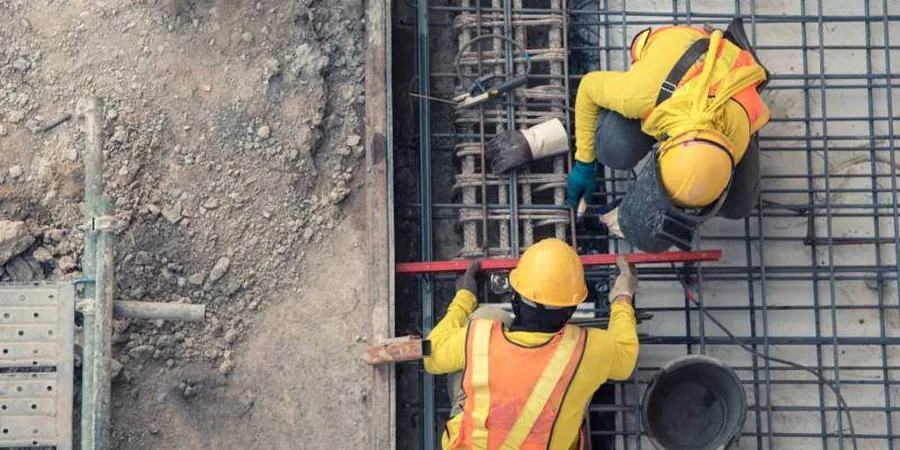
Variable glacial till and river deposits demand site-specific soil mechanics testing. Generic data from nearby lots often misleads foundation design.
Technical details of the service in Fredericton
Demonstration video
Typical technical challenges in Fredericton
The Saint John River floodplain contains soft silts and clays with high compressibility. These layers can settle unevenly under load if not identified early. During spring thaw the water table rises within 2 meters of the surface in low-lying areas. A soil mechanics study in Fredericton must capture seasonal groundwater fluctuations. We install standpipe piezometers and monitor levels for at least one full cycle. Missing this step can lead to buoyancy failure in basements or frost heave in slab-on-grade foundations. Our reports include groundwater contours and recommended drainage measures.
Our services
We cover the full scope of geotechnical investigation under one contract. Each service is tailored to Fredericton's geology and local building code requirements.
Borehole Drilling & Sampling
Continuous flight auger and split-spoon sampling to depths of 30 meters. We log every 0.3 m and classify soil per CFEM.
Laboratory Testing Suite
Moisture, density, Atterberg limits, grain size, unconfined compression, and consolidation. All tests follow ASTM procedures with ISO 17025 quality control.
Geotechnical Report & Foundation Recommendations
Detailed analysis of bearing capacity, settlement, groundwater, and seismic site class. Includes shallow and deep foundation options per NBCC 2020.
Seasonal Groundwater Monitoring
Standpipe piezometers with weekly readings over three months. We correlate data with river stage and precipitation records.
Frequently asked questions
How long does a soil mechanics study take in Fredericton?
A standard residential study takes 10 to 14 business days from drilling to final report. Larger commercial projects with multiple boreholes may require 3 to 4 weeks depending on access and weather.
What is the difference between a soil mechanics study and a geotechnical investigation?
A soil mechanics study focuses on the physical and mechanical properties of the soil — strength, compressibility, permeability. A geotechnical investigation is broader and includes slope stability, foundation design, and groundwater control recommendations.
Do I need a soil mechanics study for a small addition or deck in Fredericton?
The City of Fredericton requires a geotechnical report for any structure with a footprint over 50 m2 or where the soil is suspected to be soft fill. For small decks on undisturbed ground, a visual inspection by a qualified engineer may suffice.
What does a soil mechanics study cost in Fredericton?
Typical costs range between CA$4.700 and CA$6.260 for a single-family lot with two boreholes and a full lab suite. Complex sites with deep boreholes or groundwater monitoring can exceed that range.
How deep do you drill for a soil mechanics study in Fredericton?
We drill to a minimum of 1.5 times the width of the proposed foundation, or until we encounter competent glacial till. For most houses that means 6 to 12 meters. For high-rise buildings we go deeper, often 20 to 30 meters.