In-situ testing in Fredericton provides direct geotechnical data within the complex glacial and alluvial deposits of the Saint John River Valley. These methods bypass sample disturbance to capture true soil behaviour, essential given the region's interbedded silts, clays, and tills. Local practice adheres to the Canadian Foundation Engineering Manual, with procedures often calibrated to ASTM and CSA standards. For water-bearing strata, field permeability testing (Lefranc/Lugeon) quantifies hydraulic conductivity directly in boreholes, a critical step for dewatering and foundation design. Complementing this, undisturbed sampling (Shelby tube) recovers high-quality specimens from sensitive clay layers for accurate laboratory strength and consolidation analysis.
These investigations directly support infrastructure and building projects common in New Brunswick's capital, from river bridge piers to commercial developments on compressible floodplain soils. Reliable field parameters are mandatory for slope stability assessments along the riverbanks and for designing deep foundations in till. Integrating permeability profiling with strength data from undisturbed samples forms a defensible geotechnical model, reducing uncertainty in a setting where variable soil conditions directly impact construction risk and long-term performance.
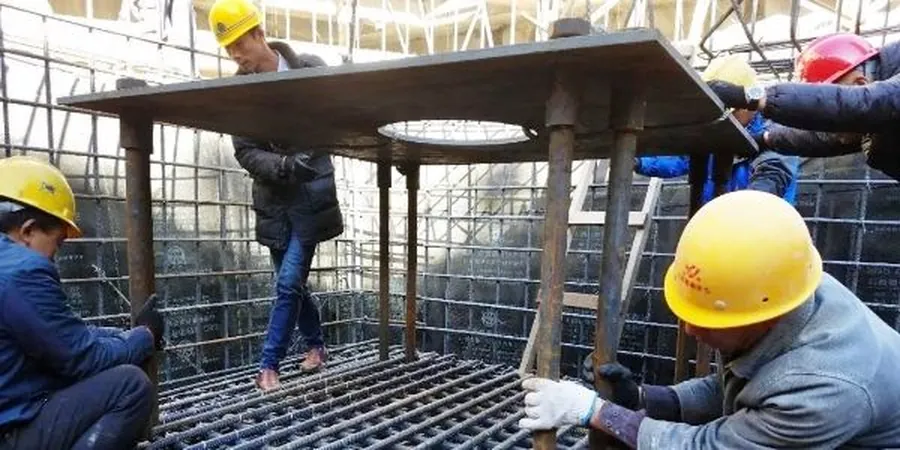
Base isolation in Fredericton shifts building periods beyond the 0.5–1.5 s band where local soils amplify motion, reducing spectral acceleration by up to 50%.
Technical details of the service in Fredericton
Key parameters for Fredericton include:
- Peak ground acceleration (PGA) from NBCC 2020: 0.12 to 0.20 g
- Site class D amplification factors Fa and Fv near 1.2 to 1.5
- Design displacement at the isolation interface: typically 200–400 mm
- Damping ratio of lead-rubber bearings: 10–30% equivalent viscous
Typical technical challenges in Fredericton
NBCC 2020 requires that the seismic force resisting system remain essentially elastic when base isolation is used, but the real risk in Fredericton is underestimating the soil-structure interaction. The deep alluvial deposits can lengthen the effective period beyond what the design spectrum assumes, potentially causing resonance if the isolator period is poorly chosen. Also, bearing capacity under cyclic vertical loads must be verified; the glaciofluvial sands are prone to cyclic mobility under repeated shear. Shear-wave velocity profiling and cyclic triaxial testing on undisturbed samples are essential to validate the design parameters.
Our services
We provide the full suite of analysis and design support for base isolation in Fredericton: from site-specific response spectra to isolator specification and detailing.
Site-Specific Seismic Hazard Analysis
Probabilistic and deterministic hazard assessment using the Geological Survey of Canada's 6th generation model. We compute uniform hazard spectra for Fredericton and develop site-specific acceleration time histories for nonlinear isolation analysis.
Isolator Selection and Detailing
Lead-rubber bearings, high-damping rubber bearings, or friction pendulums sized for the expected displacement and gravity loads. We provide force-displacement loops, stability checks per NBCC 2020, and connection detailing to CSA A23.3.
Frequently asked questions
How much does base isolation seismic design cost in Fredericton?
The cost for a complete design package typically ranges between CA$5.020 and CA$10.680, depending on the building size, number of isolators, and level of site investigation required. This includes hazard analysis, isolator sizing, and connection detailing.
What is the difference between base isolation and conventional seismic design?
Conventional design allows the structure to yield and dissipate energy through ductility, while base isolation places flexible bearings between the foundation and superstructure so the building moves as a rigid body. In Fredericton's moderate seismic zone, isolation can reduce floor accelerations by 50–70% compared to a fixed-base design.
Can base isolation be retrofitted to existing buildings in Fredericton?
Yes, retrofit is feasible for buildings with adequate column grid and foundation capacity. The existing foundation is cut, and isolators are installed between the top of the existing columns and a new transfer beam. A site-specific analysis of the existing soil and structural condition is required.
Which building types benefit most from base isolation in Fredericton?
Critical facilities like hospitals, fire stations, emergency operations centers, and schools with post-disaster functions benefit most. Also, buildings with sensitive contents such as data centers, laboratories, and museums where low floor accelerations are required to protect equipment and artifacts.